If you are shopping in Queen Creek, the home itself is only part of the decision. In many master-planned communities, your day-to-day experience also includes HOA rules, amenity access, design review, and monthly or quarterly costs. When you understand how those pieces work before you buy, you can choose with more confidence and avoid surprises after closing. Let’s dive in.
Why master-planned communities matter in Queen Creek
Queen Creek’s long-range planning is shaped by growth, open space, recreation, water resources, and neighborhood preservation. Town planning documents also emphasize trail connections, community facilities, safe circulation, and design standards that support the area’s small-town rural character.
For you as a buyer, that means many neighborhoods are designed around more than just homes and streets. You may find communities with shared amenities, connected open areas, and architectural standards that create a more consistent look and feel over time.
What a master-planned community usually includes
In Queen Creek, master-planned communities often combine housing with shared features and association management. The exact mix varies by neighborhood, but amenities and rules are usually built into the ownership experience.
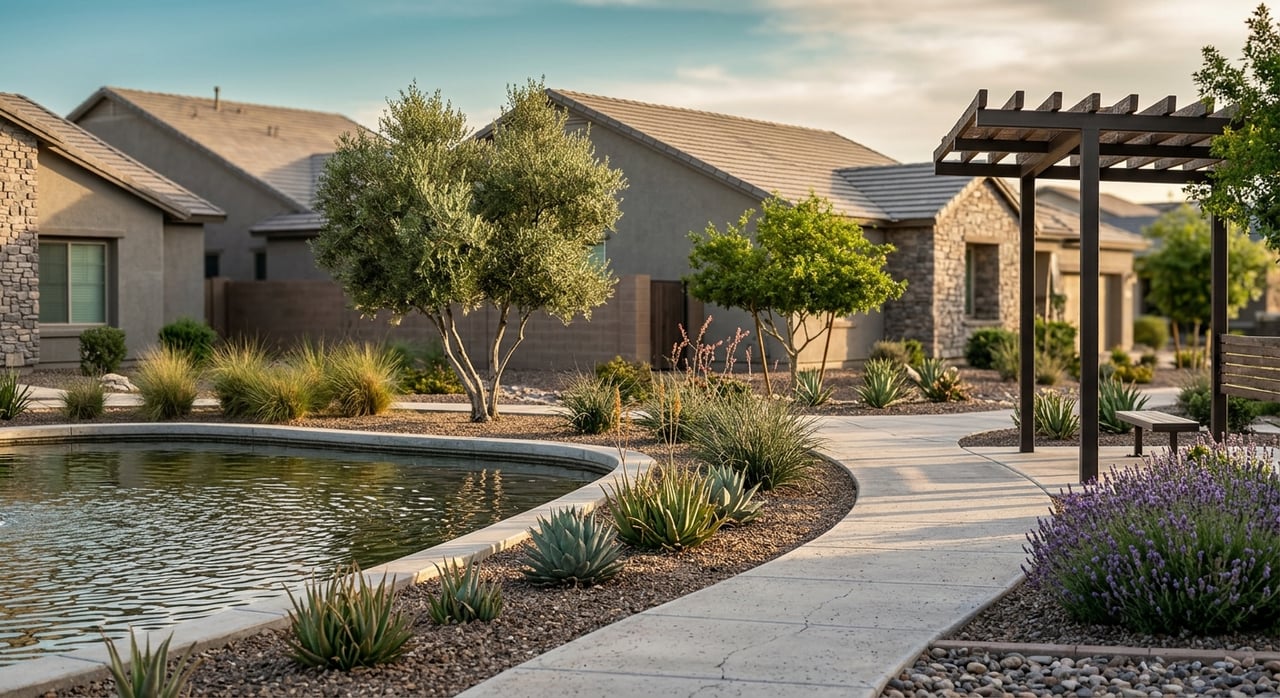
Examples in Queen Creek include Ironwood Crossing and Barney Farms. Ironwood Crossing describes 2,147 single-family homes along with aquatic centers, the Ironwood Room, a reservable splash-pad ramada, and a soccer field. Barney Farms highlights a 22-acre deep-water lake, kayaking and canoeing, catch-and-release fishing, a community center, pool amenities, sand volleyball, pickleball, bocce courts, playgrounds, green space, an event lawn, and ramadas.
Amenities are often resident-focused
One common misconception is that community amenities work like public parks. In many HOA communities, that is not the case.
Barney Farms says resident key fobs open the Barn, pool facilities, restrooms, and related areas. Ironwood Crossing uses mobile access points for aquatic centers. Some spaces may be reservable, while others operate on a first-come, first-served basis.
Lifestyle programming may be part of the appeal
Amenities are not always limited to physical spaces. Some communities also promote classes, clubs, volunteer opportunities, events, and resident-led gatherings.
If that kind of built-in activity matters to you, it is worth asking not just what amenities exist, but how residents actually use them. A neighborhood can look great on paper, but your fit depends on how you plan to live there.
How HOAs fit into Queen Creek neighborhoods
In many Queen Creek master-planned communities, the HOA helps maintain shared features and enforce community rules. The Town of Queen Creek says neighborhood common areas are maintained by HOAs, or by the adjacent property owner in neighborhoods without HOAs.
Queen Creek Code Compliance separately enforces regulations tied to zoning, property maintenance, signage, graffiti, and construction activity. In other words, HOA oversight and town enforcement are not the same thing, and both can affect what owners may need to do.
Is HOA membership optional?
In communities like Barney Farms and Ironwood Crossing, no. Both state that when you buy a home there, you become a member of the association and are responsible for assessments.
That is why it is important to treat the HOA as part of the total ownership picture. You are not just buying a house. You are also stepping into a set of shared obligations, services, and rules.
What HOA fees may cover
HOA fees vary by community, and the amount alone does not tell the full story. What matters is what those assessments fund, how they are billed, and whether there are additional charges tied to resale or move-in.
Ironwood Crossing currently lists a 2026 monthly assessment of $225. According to the community, that covers association operations, amenity access, and sewer service.
Barney Farms currently lists annual assessments of $1,980, billed quarterly at $495. Even when two communities are in the same town, their billing structure and included services can look very different.
Watch for resale and closing-related HOA charges
The regular assessment is not always the only HOA cost connected to a purchase. Some communities also have transfer, disclosure, prepaid assessment, or enhancement-related fees due at closing.
Ironwood Crossing lists resale-related charges that include a transfer and disclosure fee, a community enhancement fee equal to one-half of 1 percent of the sale price, and prepaid assessments due at closing. That is one reason buyers should review the HOA cost structure early, not just the list price of the home.
Why HOA documents matter before you buy
One of the most important steps in an HOA purchase is reading the resale-disclosure package. This is where you move from marketing language to the actual rules, finances, and community obligations that come with ownership.
Arizona law requires associations to provide key documents in the resale process. These include the declaration, bylaws, rules, a dated statement of assessments and contact information, insurance and reserve information, the current operating budget, the most recent annual financial report, the most recent reserve study if any, and a summary of pending litigation.
What to review in the disclosure package
Before you remove contingencies or move too far into the transaction, make time to review:
- Monthly, quarterly, or annual assessment amounts
- Community rules and use restrictions
- Budget and financial reporting
- Reserve information and any reserve study
- Insurance information
- Pending litigation summary
- Contact information for the association or management company
This review can help you understand both the current cost of ownership and the broader health of the association. It can also help you spot rules that may affect your plans for the property.
Exterior changes often need approval
If you plan to personalize your home after closing, pay close attention to design review rules. In many HOA communities, exterior work cannot begin until you receive approval.
Barney Farms says approval is required for landscaping and exterior changes such as painting, new plants, or permanent structures, and requests should include photos and other supporting information. Ironwood Crossing also says paint approval and design review are part of the homeowner process, with guidelines intended to balance creativity and diversity with the natural desert landscape.
HOA approval and permits are not always the same thing
A frequent point of confusion is whether HOA approval replaces a town or county permit. It often does not.
Barney Farms notes that some projects may also need Town of Queen Creek or Pinal County permits before work starts. If you are planning a change after closing, it is smart to verify both layers of approval before scheduling the work.
Questions to ask before buying in a Queen Creek HOA
When you tour a home in a master-planned community, try to go beyond the model-home feeling. A few focused questions can give you a clearer picture of how the neighborhood functions in real life.
Consider asking:
- Is amenity access resident-only, or can guests use certain spaces?
- Are any amenities reservable, and are deposits required?
- What are the current assessments, and how are they billed?
- Are there transfer, disclosure, or community enhancement fees at closing?
- What exterior changes require design review?
- Could any planned work also require a town or county permit?
- What documents are included in the resale-disclosure package?
These questions can help you compare communities on more than appearance alone. They also make it easier to line up your budget, lifestyle, and future plans with the right neighborhood.
How to compare Queen Creek communities with confidence
The best community for you is not always the one with the longest amenity list. It is the one that matches how you want to live, what you want to spend, and how much structure you are comfortable with.
Some buyers love the predictability of design standards, organized amenity access, and shared upkeep. Others want to understand those tradeoffs more carefully before committing. Either way, a clear review of HOA documents, costs, and approval processes can help you make a better decision.
If you are comparing neighborhoods in Queen Creek, we can help you look past the brochure and evaluate the details that matter in the real world. When you are ready for guidance tailored to your move, connect with Steck Residential.
FAQs
What is a master-planned community in Queen Creek?
- In Queen Creek, a master-planned community typically combines homes with shared amenities, open space, and HOA management, with design standards and community features that are planned together.
Are HOA amenities in Queen Creek open to the public?
- Usually no. In communities like Barney Farms and Ironwood Crossing, amenities are generally resident-focused, with access controlled through key fobs or mobile entry systems.
Is HOA membership required when buying in Queen Creek communities?
- In communities such as Barney Farms and Ironwood Crossing, yes. Buying a home there makes you a member of the association and responsible for assessments.
What do HOA fees cover in Queen Creek master-planned communities?
- It depends on the community. For example, Ironwood Crossing says its assessment covers association operations, amenity access, and sewer service, while other communities may structure fees differently.
What HOA documents should buyers review in Arizona?
- Arizona resale-disclosure law requires associations to provide documents such as the declaration, bylaws, rules, assessment information, insurance and reserve information, the current budget, recent financial reporting, any reserve study, and a litigation summary.
Do exterior home changes in Queen Creek HOA communities need approval?
- Often yes. Communities may require design review for items like paint, landscaping, new plants, or permanent structures, and some projects may also require Town of Queen Creek or county permits.